

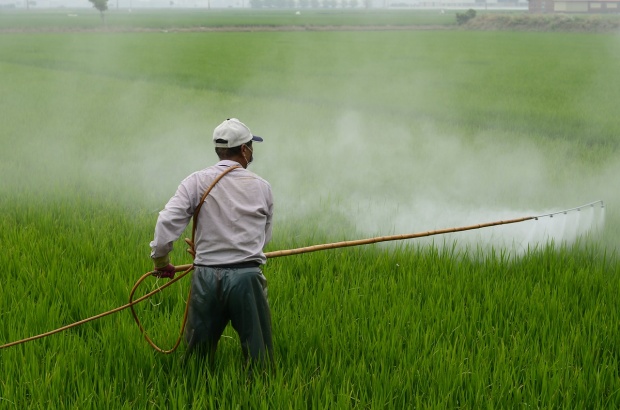
The Foundation For The Defense Of Citizens Against State Abuses (FACIAS) believes that the Romanian state has an obligation to protect the health of the population and to ban the use of glyphosate-based products proven at European level to be carcinogenic. On 2 July 2019, Austria banned the use of these substances.
FACIAS has reported the worrying situation caused by the use of glyphosate to the Ministry of Agriculture and Rural Development and has asked the Ministry to ban the use of products containing this substance in Romania.
At FACIAS's request, the Ministry of Agriculture replied that there is no scientific or legal basis to justify a ban on the use of glyphosate in our country as the European Food Safety Authority's Scientific Assessment for glyphosate would have concluded that the classification of glyphosate as carcinogenic, mutagenic or toxic to reproduction is not justified. And on the basis of these assessments, the approval of glyphosate use in Romania was renewed, despite the fact that the International Agency for Research on Cancer (IARC) has declared glyphosate a "probable human carcinogen".
Moreover, a recent study published in the journal Global Research provides alarming new evidence that glyphosate's carcinogenic properties are passed down at least three generations.
Also, the German company Bayer, which bought Monsanto, Romania's leading pesticide producer, has been ordered in several cases in the United States to pay criminal compensation payments of more than two billion dollars. In the US, there are currently around 13,400 legal complaints against Bayer over its Roundup product.
More and more countries are phasing out the use of glyphosate-based products, the most recent example being Austria. On Tuesday 2 July, the parliament in Vienna approved an amendment to the law that completely bans the use of glyphosate in the country. At the same time, several countries have phased out the substance, and there is now a Europe-wide citizens' initiative calling for a ban on glyphosate. The petition has already been signed by 1.3 million people. The European Commission recently mandated France, Hungary, the Netherlands and Sweden to assess whether or not the pesticide should be banned after its licence expires in 2022.
In our country, glyphosate is used 75% on agricultural land for the purpose of soil preparation for main crops of wheat and maize. In view of this, FACIAS believes that banning glyphosate and using additional methods to replace it is a priority for the protection of Romanians' health.