

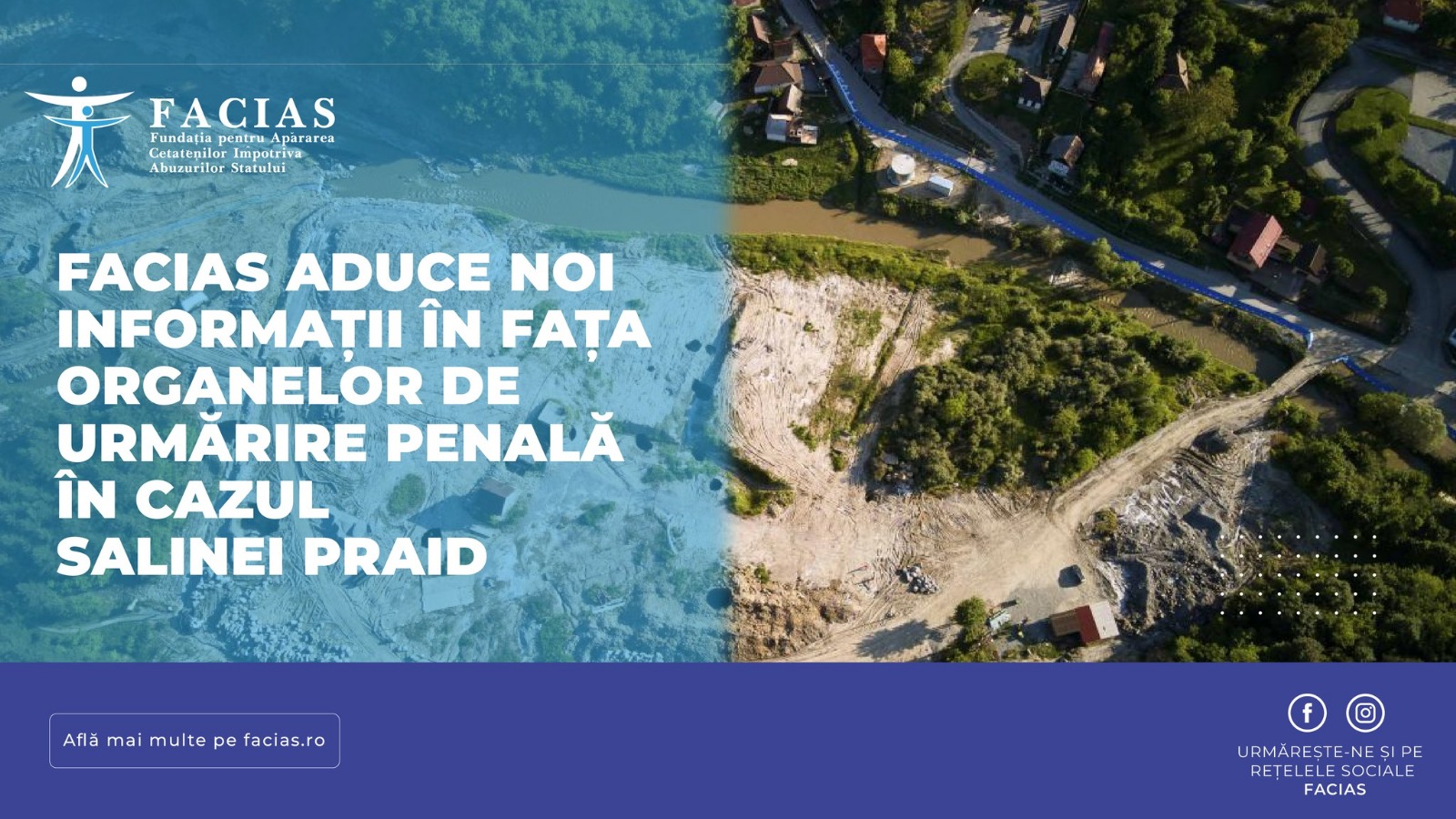
The Foundation For The Defense Of Citizens Against State Abuses (FACIAS) has brought new evidence in the case of the ecological disaster at the Praid Salt Mine, confirming that the Romanian state authorities knew as early as 2007 that the area was in danger. However, for 18 years, they did nothing concrete to prevent a catastrophe that occurred in May 2025. FACIAS submitted new evidence to the Prosecutor's Office of the High Court of Cassation and Justice (PICCJ) in connection with the complaint filed in June this year in the case of the disaster at the Praid Salt Mine.
Preventing the infiltrations that destroyed the salt mine would have cost only €1.9 million, a negligible amount compared to the more than €4 million paid by the state-owned company SALROM in salary bonuses in 2022 alone. In its complaint, FACIAS requested that the employees involved from the National Administration "Apele Române" and the National Salt Company (SALROM) be identified and held accountable.
The same company reported a net profit of €22 million that year. Instead of investing this money in protecting a strategic salt reserve (estimated at €12 billion), it allocated almost €30 million to personnel expenses. The salt reserves in Praid, which are strategic for Romania's economy, exceed 500 million tons and have a theoretical gross value of at least €12 billion.
Official documents and scientific studies made available to law enforcement agencies by FACIAS show that the disaster at Salina Praid is a direct consequence of abuse committed by state authorities in violation of their legal obligations to protect lives, property, and national heritage.
A scientific study published in 2007 pointed out that the Corund stream is a real threat to the integrity of the salt mine because it can dissolve salt. The technical solutions proposed back then—diverting the stream and setting up monitoring stations—were never put into action. In addition, the organization legally responsible for safeguarding the Praid Salt Mountain Nature Reserve, the Cholnoky Jenő Geographical Society, took no concrete action, even though the danger was clearly stated in the official management plan approved by the Ministry of the Environment.
In May 2024, just one year before the collapse of the salt mine, water infiltration led to the temporary closure of the site. The mine was quickly reopened without any real intervention, even though the warning signs were obvious.
With the new set of evidence submitted, FACIAS is calling for the identification and criminal prosecution of those who, despite having clear responsibilities, chose to turn a blind eye. These are employees of the National Administration "Apele Române" and the company SALROM, who allowed the loss of a national heritage of inestimable value.