

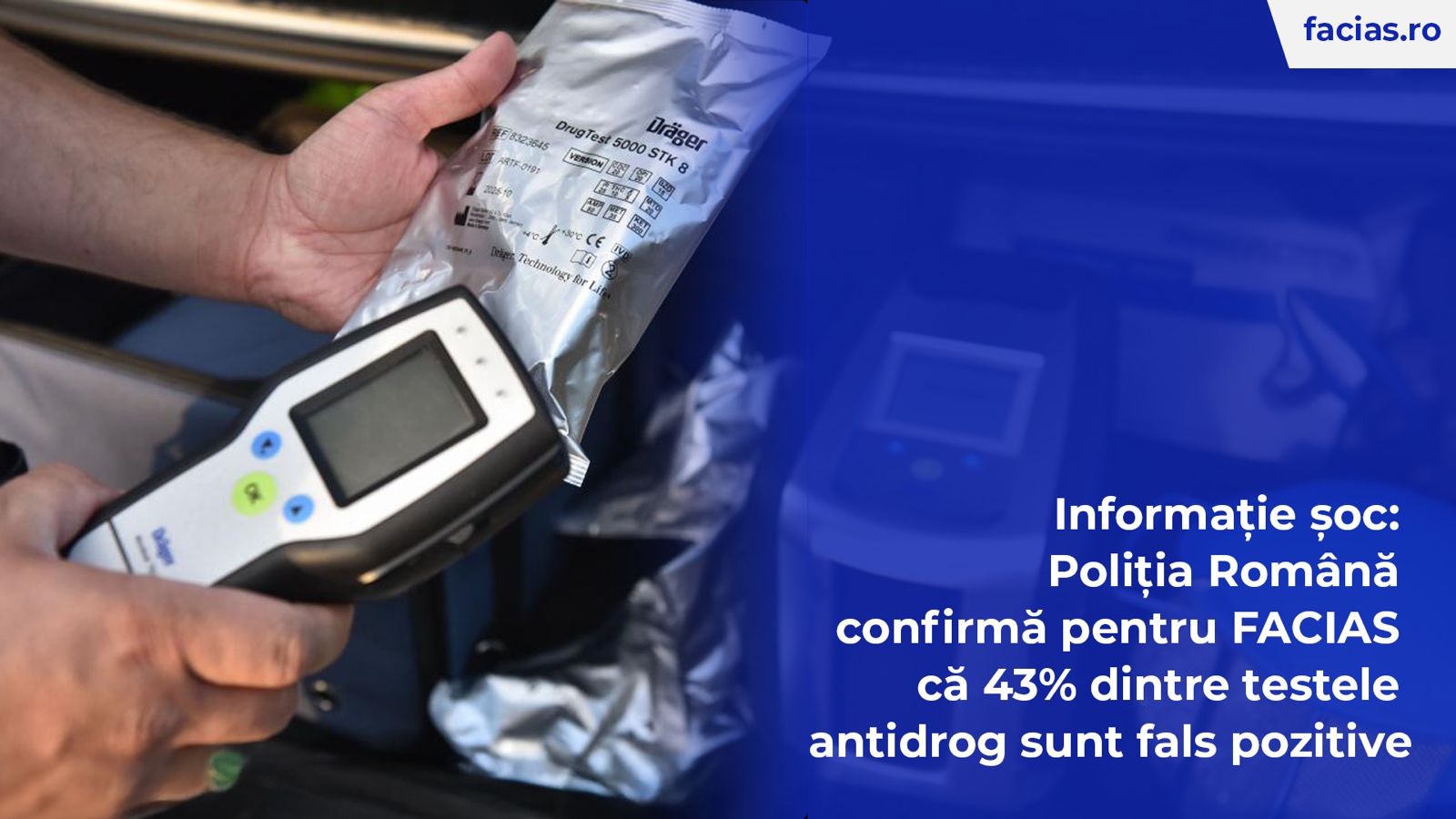
The Foundation for the Defence of Citizens against State Abuses (FACIAS) has published data confirming the extent of abuse that drivers are subjected to when they are drug tested by the Romanian police. According to the General Inspectorate of the Romanian Police (IGPR), 43% of the positive results recorded between July 2024 and April 2025 were later refuted by toxicology laboratory tests.
Although the law states that these tests are preliminary, in practice they have immediate legal consequences for drivers.
Specifically, between 18 July 2024 and 28 April 2025, there were 3,367 preliminary positive tests with the Dräger DrugTest-5000 machines. Of these, 1,450 cases were subsequently refuted by toxicology report cards, indicating a rate of 43% laboratory-confirmed negative results. A false positive test generates the same legal consequences up to the laboratory result. This leads to driving license suspension and stigmatization of the persons concerned.
The IGPR's response to FACIAS clearly states that this situation can be explained by differences in the types of samples analysed (saliva vs. blood/urine), distinct methods of collection and analysis, the sensitivity of the machines to certain compounds, or the possibility that the substances were present in a concentration undetectable by laboratory methods. Furthermore, no institution has made public the list of compounds and foodstuffs that may cause false positive results.
Romanian police have confirmed that the machines are capable of producing false results. However, they are not taking the necessary steps to reduce the number of false positive tests.
FACIAS is committed to combating the use of banned substances while driving and the importance of road safety enforcement. However, it is unacceptable to impose sanctions on the basis of devices with a high error rate without toxicological confirmation, as this creates abusive situations.
FACIAS has just secured a resounding victory in the Bucharest Court, compelling the IGPR to disclose crucial information regarding drug tests. This includes supplements, foods, and the list of active substances in medicines that can lead to false positive results. Additionally, the IGPR is now required to reveal information on the number and model of devices to be purchased and distributed nationwide.